
I have been out of industrial activity after completing my graduation for about 2 years, then RVS Quality Certifications Pvt Ltd has changed my outlook on my career. Adopting a course in NDT has helped me launch my career.
Why Is Phased Array Ultrasonic Testing Replacing Traditional Radiography
- By: Admin
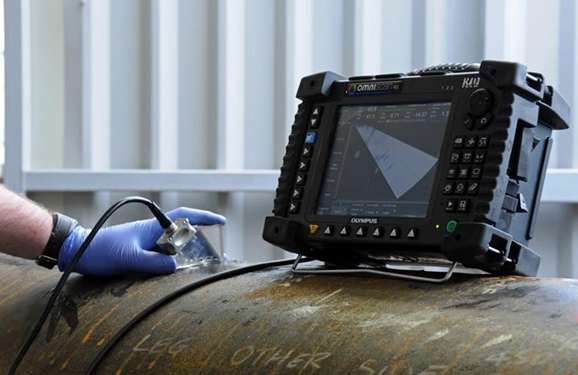
The industrial landscape is currently witnessing a massive shift in how we verify structural integrity. For decades, X-rays were the preferred method for inspecting solid metal components and welds. However, modern safety requirements and the need for speed have significantly altered the landscape. Today, Phased Array Ultrasonic Testing has emerged as the preferred method for high-stakes inspections. The system provides superior depth assessment together with instant feedback capabilities, which surpass what traditional methods offer. This evolution reflects a broader commitment to both worker safety and technical precision in manufacturing and construction.
Scaling Operations Without Environmental Impact
Protecting the planet has become a core pillar of modern industrial operations and corporate ethics. Radiography involves chemicals for film processing and the disposal of radioactive isotopes after their use. The acoustic methods used today require nothing more than a simple water-based gel or couplant. This makes the entire process much greener and easier to manage in sensitive outdoor environments. Companies are finding that green technology often coincides with better financial performance over the long term. Reducing waste and eliminating chemical hazards simplifies the logistics of any major field project or construction site.
- No toxic chemicals are required for developing images or cleaning equipment.
- Minimal equipment footprint allows for testing in tight or confined spaces.
- Battery-powered units reduce the need for heavy power generators on-site.
- Lower insurance premiums due to the removal of radioactive sources from sites.
Eliminating Radiation Hazards in the Workplace
Safety remains the most compelling reason why many firms are moving away from traditional radiography. Conventional X-ray methods require clearing large areas to protect workers from harmful ionising radiation exposure. By switching to Ultrasonic Testing Services, companies can keep their production lines running without any interruptions. There are no hazardous rays, no lead-lined rooms, and no need for expensive film processing. This transition keeps the shop floor moving while maintaining a much healthier environment for everyone. It turns a dangerous, time-consuming chore into a streamlined and safe diagnostic procedure that saves lives.
Mapping Defects with Three-Dimensional Clarity
Visualizing a flaw in three dimensions is much easier than looking at a flat X-ray. Traditional radiography often struggles to show the exact depth of a crack within a thick wall. The phased approach provides a "top-down" and "side-view" perspective simultaneously for better spatial awareness. This allows engineers to decide if a defect is near the surface or buried deep. Knowing the precise location helps in deciding whether a part needs a total replacement. It takes the guesswork out of maintenance and assures that repairs are targeted and effective for every asset.
Mastering Precision with Advanced Beam Control
Standard ultrasonic probes use a single crystal to send one sound wave into a part. In contrast, the newer technology utilises multiple small elements that fire in a specific sequence. This software-driven approach allows technicians to steer and focus the sound beam at various angles. Many professionals are now seeking NDT Level 2 Certification Courses to handle these complex digital systems. They learn how to interpret the multi-colored cross-sections that reveal defects with incredible spatial accuracy. Having this granular control means that even the smallest hairline cracks are easily identified and fixed.
A New Standard for Structural Reliability
The transition to acoustic-based imaging represents a turning point for heavy industry and infrastructure. We are moving toward a world where data is instant, and safety is never compromised. By choosing technology that prioritizes both people and precision, businesses are securing their operational future. These tools provide a level of transparency that was previously impossible to achieve with old film. As equipment becomes more portable and software more intuitive, the old ways will continue to fade. Embracing this change assures that the bridges, ships, and pipelines of tomorrow are built to last a lifetime.
Boosting Efficiency Through Digital Data Storage
Waiting for film to develop in a darkroom is a relic of the past. Modern digital systems allow for the immediate capture and sharing of high-resolution inspection data. Leading equipment providers like RVS Quality Certifications Pvt. Ltd. recognize the value of precision engineering in every tool they offer and provide Non Destructive Testing Services across various sectors. Instead of physical archives, inspectors now save thousands of scans on small portable hard drives. This digital trail makes it easy to compare results over several years of service for better maintenance.
- Instant visualisation of internal flaws on a bright digital display.
- Simplified reporting through automated software that generates detailed PDF summaries.
- Easy sharing of scan files with remote engineers for secondary opinions.
- Permanent electronic records that satisfy stringent regulatory and insurance audit requirements.
The Future of Inspection
Moving forward, the focus will remain on refining these digital tools to be even more accessible. The industry has reached a point where waiting for slow, hazardous results is no longer acceptable. High-speed data and clear imagery have become the new benchmarks for success in every technical field. Investing in modern methods demonstrates a clear dedication to quality and a respect for the workforce. When we choose better tools, we build a safer world for everyone involved in the process. This progress is not just about technology; it is about building a foundation of trust and reliability.
Testimonials

Aniket Singh
RVS is the absolute best value to learn Aerospace NDT Training Course to nurture my skills. I am completely satisfied with how affordable the service they provide. Thanks RVS Team for constant support.

Roshan Kumar
I would like to thank RVS for their time and patience in helping me learn and grow with my NDT courses. I was able to work and learn at the same time, with no pressure. I would recommend RVS to anyone seeking to work and take courses at the same time. I accomplished the course and today I'm a Certified PCN Level II UT engineer.

Himanshu
RVS helped our new hires to acquire the comprehensive training they need, as well as for refresher courses for our current employees. This has worked well for us in obtaining the necessary NDT certifications.

Surya Rajput Rana
Just a few lines to express my gratitude for your outstanding service over the past year. We would have no issue in referring to your organisation because of your customer devotion and professionalism.

Akshat Jaiswal
Frequently Asked Questions
NDT is employed in a wide range of industries, including oil and gas, aerospace, energy, power, nuclear, and transportation, with nearly endless career opportunities. A job in NDT is extremely dynamic, and ongoing training is required.
One of the advantages of a four-year NDT programme is that students can study in a more focused and instructive manner. For graduates, this offers up a plethora of new NDT employment options, including quality assurance, management, engineering design, research, NDT training, and teaching.
Non-Destructive Testing (NDT) Training Courses - Levels 1, 2 and 3.
The PCN (Personnel Certification in Non-Destructive Testing) is a programme that meets the BS EN ISO 9712 requirements for NDT technicians and supervisors. It is founded in the United Kingdom, but it has an impact on a number of countries in the European Union.
© 2026 RVS Quality Certifications Pvt Ltd. All Rights Reserved.