

I have been out of industrial activity after completing my graduation for about 2 years, then RVS Quality Certifications Pvt Ltd has changed my outlook on my career. Adopting a course in NDT has helped me launch my career.
How NDT Equipment Manufacturers Support Quality Assurance in Industries
- By: Admin
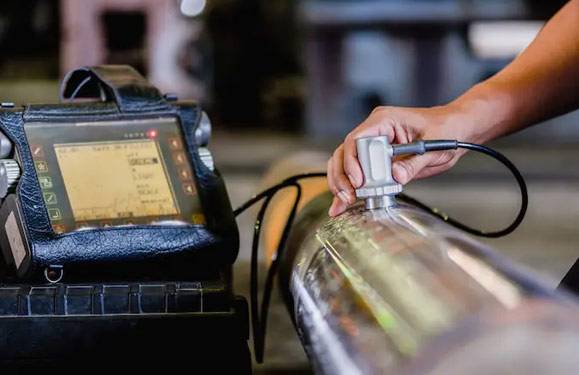
Think about the last time you crossed a bridge, boarded a flight or walked through a building under construction. You probably didn't stop to wonder whether the steel beams holding everything together had been properly inspected. Most people don't. But what about the engineers, quality managers and safety officers who are responsible for those structures? They think about it constantly. And the reason they can sleep at night is largely because of one thing — non-destructive testing. At the heart of that process are NDT Equipment Manufacturers, by specialists like RVS Quality Certifications Pvt. Ltd., who build the tools that enable inspection of materials.
They're Not Just Selling Machines
Here's something that most people outside the industry don't realise: a good NDT equipment manufacturer isn't just a supplier. The equipment they put out has to work accurately under pressure — sometimes literally, in the middle of a refinery shutdown or an aircraft maintenance bay at odd hours. It can't afford to give a false reading. What serious NDT equipment producers bring along with their products:
- Instruments built and verified against global standards such as ASNT, ISO 9712, and PCN.
- Portable, field-ready designs that hold up in confined spaces, offshore environments or dusty construction sites.
- Integrated software that logs inspection data and makes reporting far less painful for quality teams.
- Calibration support so that accuracy doesn't drift over months of continuous use.
- Application-specific probes and add-ons tailored to different materials, weld types and joint designs.
The Industries Where There's No Room for Guesswork
Some industries operate on tight margins when it comes to safety. Oil and gas pipelines buried underground, aircraft fuselages doing hundreds of flights a year, nuclear reactor vessels, railway tracks handling high-speed trains — these are not places where "it looks fine" is an acceptable inspection report.
Manufacturers who serve these sectors understand the risks involved. Industries that have taken NDT seriously for decades say it's one of their best returns on investment.
Catching Problems Before They Become Disasters
There's been a real shift in how industries approach maintenance over the last decade or so. Earlier, the standard practice was to inspect something when it showed symptoms or when a scheduled maintenance window came around. Now, smarter operations don't wait that long. Condition Monitoring Services, implemented, take an entirely different approach—they watch assets continuously and raise a flag the moment something starts behaving differently from normal.
Why this approach matters on the shop floor:
- Bearing wear, shaft imbalance and misalignment show up weeks before a breakdown happens.
- Surprise failures stop holding production schedules hostage.
- Expensive assets last longer because we resolve problems at the right time, not too late.
- Maintenance teams can plan their work instead of constantly reacting to emergencies.
- Over time, the data builds a clear picture of how equipment behaves under different operating conditions.
Historical monitoring data often reveals patterns that save companies from making the same mistakes repeatedly.
The Technology Has Come a Long Way
Early NDT was slow, heavily dependent on the inspector's experience and limited in the type of information it could provide. Today, that's barely recognisable. Equipment manufacturers have pushed hard on research and development and the tools available now can scan faster, cover more complex shapes and generate imaging that gives quality engineers a genuinely detailed view of what's happening inside a component.
When Precision Really Counts
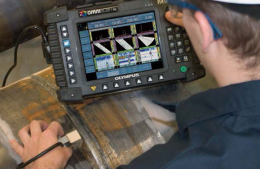
Of all the advancements that have changed the game recently, Phased Array Ultrasonic Testing deserves a special mention—and companies like RVS Quality Certifications Pvt. Ltd. have been hands-on in training professionals across India to use this technique properly. The way PAUT works is fundamentally different from conventional ultrasonic testing. Instead of sending one beam at a fixed angle, it fires multiple elements in a precisely controlled sequence, allowing the sound beam to be steered and focused electronically across a range of angles in a single pass. The outcome is a faster, more thorough inspection with cross-sectional imaging detailed enough to identify flaw orientation, size and depth with far greater confidence.
Petrochemical plants, aerospace maintenance facilities and power stations have made PAUT their go-to method for critical weld inspection—and it's not hard to see why.
What It All Adds Up To
Quality assurance isn't a department or a checklist. It's a mindset that runs through every stage of how a product is made, used and maintained. Manufacturers are one of the foundational supports of that mindset. But equipment alone doesn't build a strong QA culture—it's the combination of reliable instruments, properly trained people and a genuine commitment to getting it right that makes the difference. Industries that understand these principles don't just meet safety standards. They set them.
Testimonials

Aniket Singh
RVS is the absolute best value to learn Aerospace NDT Training Course to nurture my skills. I am completely satisfied with how affordable the service they provide. Thanks RVS Team for constant support.

Roshan Kumar
I would like to thank RVS for their time and patience in helping me learn and grow with my NDT courses. I was able to work and learn at the same time, with no pressure. I would recommend RVS to anyone seeking to work and take courses at the same time. I accomplished the course and today I'm a Certified PCN Level II UT engineer.

Himanshu
RVS helped our new hires to acquire the comprehensive training they need, as well as for refresher courses for our current employees. This has worked well for us in obtaining the necessary NDT certifications.

Surya Rajput Rana
Just a few lines to express my gratitude for your outstanding service over the past year. We would have no issue in referring to your organisation because of your customer devotion and professionalism.

Akshat Jaiswal
Frequently Asked Questions
NDT is employed in a wide range of industries, including oil and gas, aerospace, energy, power, nuclear, and transportation, with nearly endless career opportunities. A job in NDT is extremely dynamic, and ongoing training is required.
One of the advantages of a four-year NDT programme is that students can study in a more focused and instructive manner. For graduates, this offers up a plethora of new NDT employment options, including quality assurance, management, engineering design, research, NDT training, and teaching.
Non-Destructive Testing (NDT) Training Courses - Levels 1, 2 and 3.
The PCN (Personnel Certification in Non-Destructive Testing) is a programme that meets the BS EN ISO 9712 requirements for NDT technicians and supervisors. It is founded in the United Kingdom, but it has an impact on a number of countries in the European Union.
© 2026 RVS Quality Certifications Pvt Ltd. All Rights Reserved.