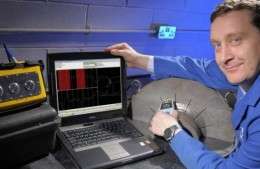
I have been out of industrial activity after completing my graduation for about 2 years, then RVS Quality Certifications Pvt Ltd has changed my outlook on my career. Adopting a course in NDT has helped me launch my career.
How Does Phased Array Ultrasonic Testing Ensure Superior Weld Quality
- By: Admin
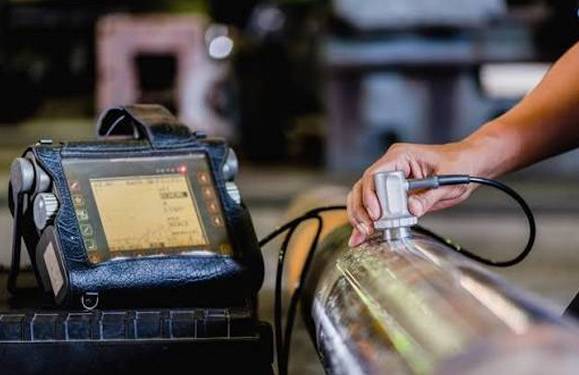
Have you ever driven over a huge steel bridge or walked past a massive factory and thought about what is actually holding the whole thing together? It usually comes down to the welds. When you melt two heavy pieces of metal together to build something big, that joint has to be perfectly solid. If there is even a tiny bubble, a missing spot, or a hairline crack hidden inside, the whole structure could eventually fail. You obviously can't just look at the outside of the painted metal to know if it is safe. You have to somehow look deep inside. This is exactly where Phased Array Ultrasonic Testing comes into the picture. It sounds like a really complicated mouthful, but it is basically just a smart, practical way to check if a metal joint is strong enough to do its job without breaking the metal apart.
Ditching the Old X-Ray Methods
For a really long time, the only decent way to check deep inside thick metal was by using x-rays. But the big problem with x-rays is that they use dangerous radiation. If you have ever been to a dentist for a tooth checkup, you know they put a heavy lead blanket on you and literally run out of the room before taking the picture. Now, imagine trying to do that on a busy construction site. Every time someone needed to check a pipe or a support beam, they had to put up caution tape and clear the entire area. Nobody could work nearby until the x-ray was done. It wasted a ton of time and honestly cost companies a fortune in everyday delays. Builders really needed a way to check things fast without having to stop the whole job site from working.
How the Sound Wave Trick Actually Works
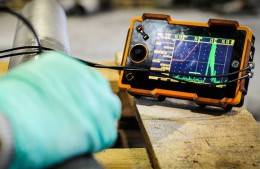
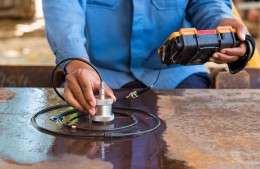
Instead of messing around with radiation, this newer method just uses simple sound waves. Think about how a doctor uses an ultrasound machine to look at a baby before it is born. This is pretty much the exact same idea, just built to handle thick steel instead of a person. A small handheld device sends a bunch of sound waves into the metal at all different angles at the same time. When those sound waves hit a hidden crack or a weird hollow spot inside, they bounce back to the machine. A computer takes all those bouncing sounds and turns them into a clear, color-coded picture on a screen. When project managers go looking for reliable Digital PAUT Inspection in Hyderabad, they are looking for this exact setup. It lets the guy holding the screen see exactly how deep a crack is, right there on the spot, without having to guess.
Why Guys on the Job Site Love It
When you are out in the field working in the dirt or up on a scaffold, anything that makes the job safer and faster is a huge win. The older ways of checking metal were just too slow and relied a bit too much on luck. Here is why most folks are switching over to this newer sound-wave approach nowadays:
- You get the whole picture: Because the sound waves sweep back and forth automatically, the machine catches weird angles and hidden spots that older, cheaper tools would completely miss.
- It saves your proof: The computer saves a video or picture of every single scan. If someone wants to double-check the work a year later, they just pull up the digital file.
- No clearing the room: Because there is zero radiation involved, guys can keep welding, painting, or working right next to the person doing the scanning.
- Instant answers: You don't have to wait for any film to develop. You know right away if the joint is good to go or if it needs to be cut out and completely redone.
Keeping Big Projects Out of Trouble
Building things like city water lines, gas pipes, or heavy machinery means dealing with a crazy amount of safety rules. You can't just build it and casually promise the government it is safe; you have to physically prove it. Having a saved digital file showing exactly what the inside of the metal looks like makes dealing with safety inspectors super easy. If you are running a massive project and need top-notch PAUT Services in India, using this technology is pretty much the only way to keep up with modern safety codes. When the state auditor shows up with a clipboard, it stops arguments before they even happen because the proof is right there on the screen.
Wrapping It All Up
At the end of the day, making sure a joint is safe shouldn't be a guessing game. Nobody wants to be the person who signed off on a bad job. The stuff we build needs to last for decades without falling apart and hurting people. By ditching the dangerous x-rays and switching over to smart sound waves, companies save time, keep their workers safe, and know for sure that their work is solid. We get how important this peace of mind is at RVS Quality Certifications Pvt. Ltd.. We make sure our teams use the best, most practical tools out there to give you straight answers about your materials. When you do it right the first time, you don't have to worry about nasty surprises popping up down the road.
Testimonials

Aniket Singh
RVS is the absolute best value to learn Aerospace NDT Training Course to nurture my skills. I am completely satisfied with how affordable the service they provide. Thanks RVS Team for constant support.

Roshan Kumar
I would like to thank RVS for their time and patience in helping me learn and grow with my NDT courses. I was able to work and learn at the same time, with no pressure. I would recommend RVS to anyone seeking to work and take courses at the same time. I accomplished the course and today I'm a Certified PCN Level II UT engineer.

Himanshu
RVS helped our new hires to acquire the comprehensive training they need, as well as for refresher courses for our current employees. This has worked well for us in obtaining the necessary NDT certifications.

Surya Rajput Rana
Just a few lines to express my gratitude for your outstanding service over the past year. We would have no issue in referring to your organisation because of your customer devotion and professionalism.

Akshat Jaiswal
Frequently Asked Questions
NDT is employed in a wide range of industries, including oil and gas, aerospace, energy, power, nuclear, and transportation, with nearly endless career opportunities. A job in NDT is extremely dynamic, and ongoing training is required.
One of the advantages of a four-year NDT programme is that students can study in a more focused and instructive manner. For graduates, this offers up a plethora of new NDT employment options, including quality assurance, management, engineering design, research, NDT training, and teaching.
Non-Destructive Testing (NDT) Training Courses - Levels 1, 2 and 3.
The PCN (Personnel Certification in Non-Destructive Testing) is a programme that meets the BS EN ISO 9712 requirements for NDT technicians and supervisors. It is founded in the United Kingdom, but it has an impact on a number of countries in the European Union.
© 2026 RVS Quality Certifications Pvt Ltd. All Rights Reserved.